The skills shortage hitting German renewables hardest
Germany's renewable energy ambitions have never been bigger. Its workforce challenge has never been more pressing.
The country is accelerating the expansion of wind, solar, battery storage and grid infrastructure at a pace that would have seemed unrealistic just a few years ago. Renewable electricity continues to make up an increasing share of Germany's power generation, while ambitious targets for onshore wind, offshore wind and transmission upgrades remain firmly in place.
Yet there is one obstacle that planning reform, investment and political ambition cannot solve overnight.
People.
Across Germany, developers, EPC contractors, utilities and investors are all competing for the same limited pool of experienced professionals. For many organisations, finding finance has become easier than finding engineers.
The question is no longer whether Germany has enough projects.
The question is whether it has enough people to deliver them.
A market growing faster than its workforce
Germany's energy transition continues to create employment across almost every renewable technology. Jobs in renewable energy, smart grids and energy storage continue to grow as the country expands its clean energy capacity and modernises its electricity network.
But labour supply has not kept pace.
According to workforce analysis highlighted by Clean Energy Wire, electricians, electrical engineers, welders and construction specialists are among the occupations facing the greatest shortages. These are not simply desirable hires. They are essential to building wind farms, connecting substations, installing solar parks and upgrading transmission infrastructure.
One vacancy left unfilled can delay an entire project schedule.
Multiply that across hundreds of developments and the impact becomes significant.
The shortage is no longer just about engineers
When people talk about the renewable energy skills gap, they often picture electrical engineers.
The reality is much broader.
Today, companies are competing for:
-
Project Managers
-
Grid Connection Specialists
-
Protection and Control Engineers
-
HV and Substation Engineers
-
Wind Turbine Technicians
-
Civil Engineers
-
Commissioning Managers
-
Construction Managers
-
HSE professionals
-
Environmental and Permitting Specialists
-
Procurement and Supply Chain professionals
Many of these candidates receive multiple approaches every week.
The strongest professionals often have several offers on the table before they actively enter the job market.
That changes how recruitment needs to work.
Offshore wind is feeling the pressure
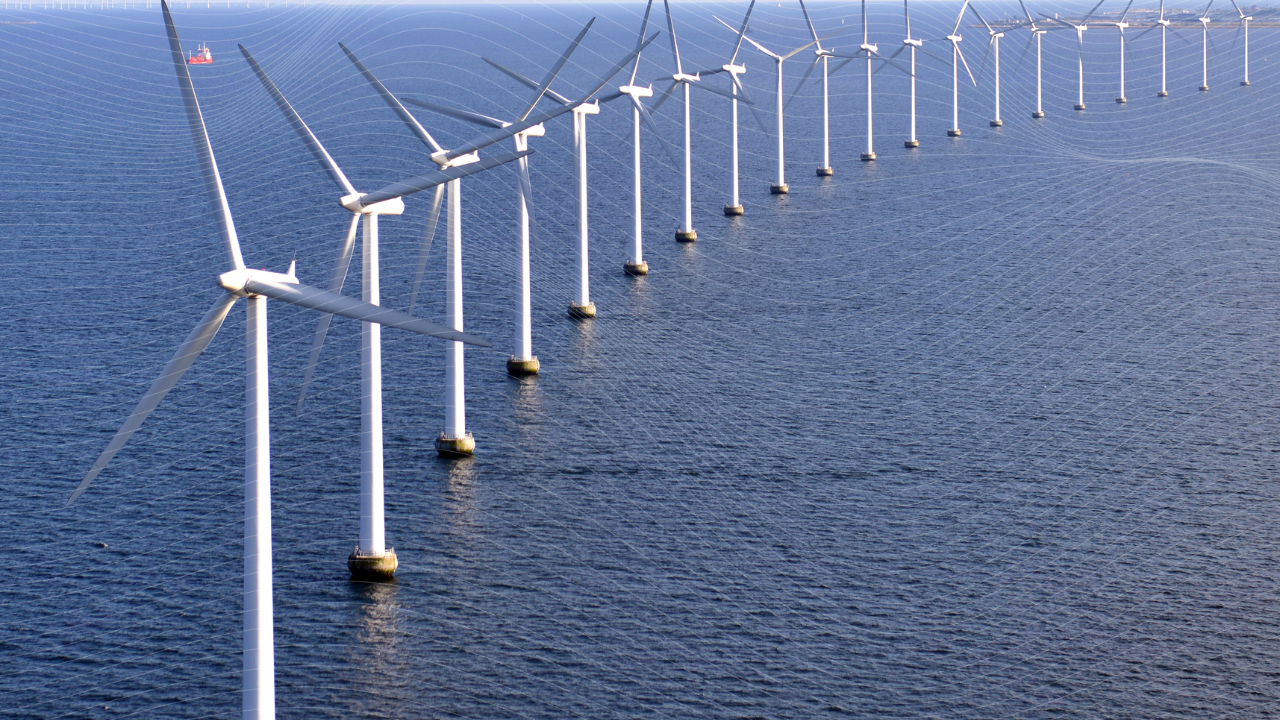
Germany has committed to significant offshore wind expansion over the next two decades, with targets reaching at least 30 GW by 2030 and 70 GW by 2045. That creates demand for thousands of highly specialised professionals across development, engineering, construction and operations.
The challenge is that offshore expertise has always been an international talent pool.
The same engineers who are qualified for projects in Germany are also being recruited into developments across the UK, the Netherlands, Denmark, Poland and the wider European market.
Competition is no longer local.
It is continental.
One Offshore Construction Director recently summed up the situation perfectly:
"We're not competing against another German developer anymore. We're competing against every offshore project in Europe."
That competition pushes salaries upwards, increases counter offers and extends hiring timelines.
Grid expansion is creating an even bigger challenge
Wind turbines and solar farms only generate value once they connect to the grid.
Germany's extensive grid reinforcement programme has therefore become just as important as renewable generation itself.
Transmission operators, EPC contractors and engineering consultancies are all recruiting experienced HV specialists at the same time.
The result is predictable.
A limited talent pool is being asked to support multiple infrastructure programmes simultaneously.
Professionals with experience across substations, transmission systems and grid integration have become some of the most sought-after individuals in the European energy market.
International hiring is becoming a necessity
Many organisations have accepted a simple reality.
The talent they need may not currently live in Germany.
Recent labour market analysis has highlighted international recruitment as one of the country's greatest opportunities to close renewable energy workforce gaps.
That means companies are increasingly looking beyond traditional hiring regions.
Engineers from Spain.
Project Managers from the UK.
Commissioning specialists from Scandinavia.
Grid experts from across Central and Eastern Europe.
Of course, attracting international professionals requires more than offering relocation support.
Candidates increasingly want:
-
Long-term project pipelines
-
Flexible working arrangements where possible
-
Clear career progression
-
Strong leadership
-
Stability
-
A purpose they believe in
Salary still matters.
It simply isn't the only factor anymore.

Expert Thoughts
Garry Rogerson, Director of Permanent Recruitment at Hunter Philips, believes Germany's renewable energy skills shortage is becoming one of the biggest challenges facing project delivery:
"The pace of investment in Germany's renewable energy sector has created demand that simply exceeds the available talent pool. The best engineers, project managers and technical specialists are often approached by multiple employers before they even consider changing jobs. That's why companies need to think beyond filling vacancies as they arise. Those that build long-term talent strategies, move quickly when the right people become available and work proactively to access specialist candidates will be in a much stronger position to keep projects on track as Germany's energy transition continues to accelerate."
Hiring slowly has become expensive
Many employers still expect recruitment to operate the same way it did five years ago.
Advertise.
Wait.
Interview.
Compare candidates.
Make a decision.
Unfortunately, today's market rarely allows that luxury.
The strongest renewable energy professionals often secure new opportunities within weeks, sometimes days.
By the time some businesses complete a four-stage interview process, their preferred candidate has already accepted another offer.
Recruitment delays don't simply increase hiring costs.
They delay projects, place additional pressure on existing teams and create further recruitment challenges as workloads increase.
Recruitment has become a competitive advantage
The organisations performing best in Germany's renewable energy market are rarely those offering the highest salaries.
Instead, they tend to do three things consistently well.
They identify talent before vacancies become urgent.
They move quickly when the right person becomes available.
And they understand that specialist recruitment requires specialist market knowledge.
For senior appointments and highly technical positions, relationships often matter more than job advertisements.
Many of the best candidates are never actively applying.
They're already delivering critical projects elsewhere.
Looking ahead
Germany's renewable energy ambitions show no signs of slowing down.
Wind deployment continues to expand. Solar installations remain strong. Grid investment is accelerating. Battery storage is growing rapidly.
The demand for skilled professionals will continue alongside that growth.
For employers, the challenge is no longer simply attracting talent.
It is building recruitment strategies capable of competing in one of Europe's most competitive renewable energy markets.
Those who recognise that early will be best placed to deliver projects on time, build stronger teams and maintain momentum throughout Germany's energy transition.
At Hunter Philips, we work with renewable energy businesses across Germany and internationally, helping them access specialist professionals who are often unavailable through traditional recruitment channels. In a market where every experienced hire counts, finding the right people has become just as important as securing the next project.