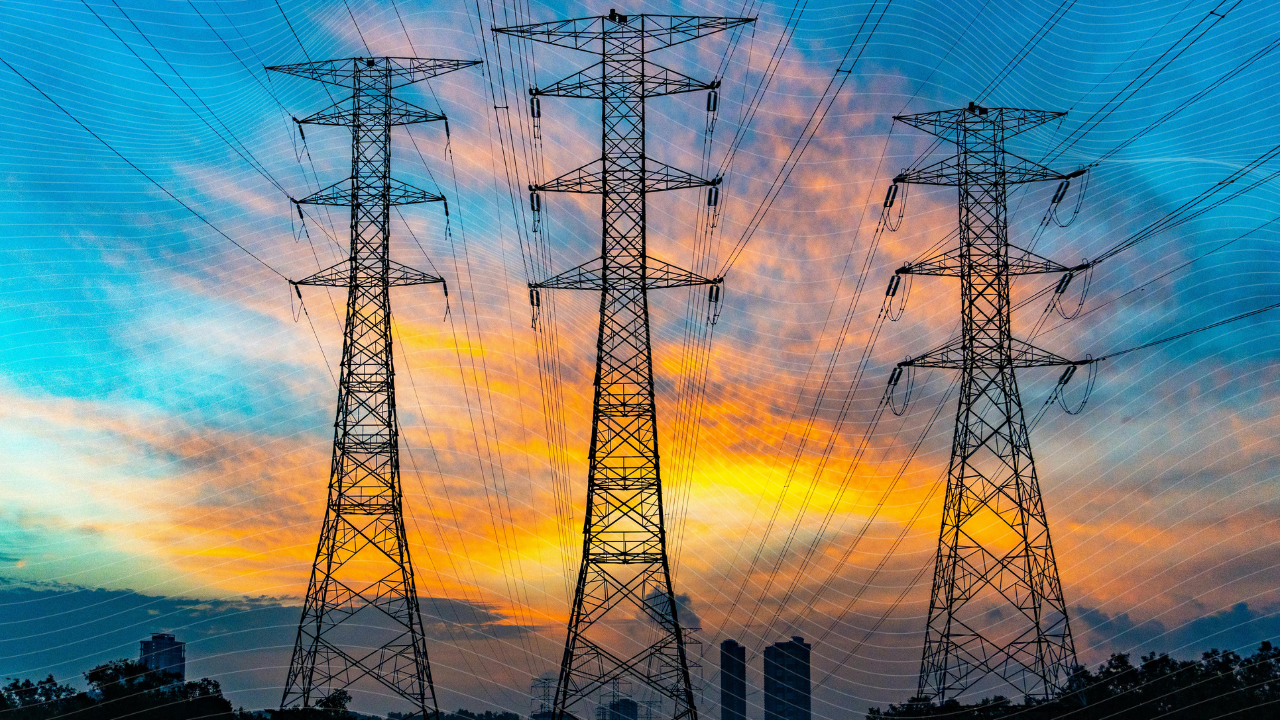
Why the best grid engineers are increasingly working abroad
For years, renewable energy conversations focused on wind turbines, solar panels and battery technology. Today, the conversation has shifted.
The grid has become the story.
Across Europe, North America, the Middle East and Asia-Pacific, governments are investing billions into transmission upgrades, HVDC interconnectors, substations and grid modernisation. The challenge is no longer generating renewable electricity. It is getting that electricity where it needs to go.
That has created an unexpected consequence.
The world's most experienced grid engineers are becoming some of the most sought-after professionals in the energy industry. Increasingly, many are choosing international opportunities over staying in their home markets.
For employers, understanding why this is happening is becoming just as important as understanding where these professionals are going.
The energy transition has become a grid challenge
Renewable generation has grown at an extraordinary pace.
What has not kept pace is transmission infrastructure.
The International Energy Agency recently highlighted that skilled labour shortages across electricity grids are becoming one of the biggest risks to delivering the global energy transition. At the same time, grid constraints are delaying renewable projects in multiple regions because networks simply cannot connect new capacity quickly enough.
This has fundamentally changed hiring priorities.
Ten years ago, utilities were primarily looking for generation specialists.
Today they are competing aggressively for:
- Protection and Control Engineers
- Grid Connection Managers
- HVDC Specialists
- Transmission Planning Engineers
- Power Systems Engineers
- Substation Design Engineers
- Grid Code Experts
Many of these professionals have decades of experience that simply cannot be accelerated through graduate recruitment.
The projects have become global
One conversation we hear repeatedly from experienced candidates is surprisingly simple.
"If I'm going to work on the biggest grid projects of my career, why limit myself to one country?"
Today's grid engineer can move between projects in:
- Germany's transmission expansion programme
- The UK's offshore transmission developments
- Australia's Renewable Energy Zones
- Saudi Arabia's giga-projects
- North America's transmission upgrades
- Interconnector developments across Europe
Each project offers different technical challenges, different regulatory environments and often significantly higher compensation.
The result is a workforce that has become genuinely international.
Unlike some engineering disciplines where local regulations dominate, many power system skills transfer remarkably well across borders.
That mobility has changed the recruitment landscape entirely.
It isn't just about salary
Pay matters.
Nobody pretends otherwise.
But salary alone rarely explains why experienced engineers relocate internationally.
Instead, candidates consistently mention a combination of factors.
Bigger technical challenges
Many senior engineers want to work on projects that define careers.
Large HVDC schemes.
Cross-border interconnectors.
National transmission expansion programmes.
Grid-forming battery projects.
Engineers often describe these opportunities as the projects they have spent their careers preparing for.
Faster decision making
Some international developers move considerably faster than traditional utilities.
Engineers who have experienced years of planning delays can find it refreshing to work in organisations where projects progress rapidly and decisions happen quickly.
Better career progression
International experience has become a valuable credential.
Working across multiple markets exposes engineers to different technologies, regulatory frameworks and delivery models.
For future leadership roles, that experience can be difficult to replicate within a single domestic market.
Lifestyle considerations
International assignments increasingly include attractive relocation packages, flexible rotations and family support.
For many professionals, the move represents both a career decision and a lifestyle opportunity.
The global shortage is becoming more competitive
Renewable energy employment continues to grow globally, with more than 16 million people now working across the sector. Yet industry bodies warn that workforce shortages remain one of the biggest barriers to continued deployment.
Grid engineering sits right at the centre of this shortage.
Unlike newer disciplines, experienced transmission engineers typically require years of operational experience.
You cannot create a Principal Protection Engineer in twelve months.
Or an HVDC expert overnight.
As more countries accelerate infrastructure investment simultaneously, competition for the same relatively small talent pool becomes increasingly intense.
What this means for employers
Some organisations still approach recruitment as though they are only competing with businesses in their own country.
That assumption no longer holds.
Today's experienced grid engineer may be comparing offers from London, Copenhagen, Dubai, Melbourne and Texas at the same time.
That changes everything.
Employers increasingly need to ask themselves:
- Are we offering technically interesting work?
- Is career progression clearly visible?
- Are hiring decisions moving quickly enough?
- Are compensation packages internationally competitive?
- Does our employer brand genuinely stand out?
The organisations attracting the strongest talent are rarely winning on salary alone.
They are winning on the complete proposition.

Expert Insight
Ken Meaney, Director and Specialist in the Power Grid sector at Hunter Philips, says the competition for experienced grid engineers has become truly global, and employers need to recognise that they're no longer just competing with companies down the road.
"One of the biggest changes we've seen is that experienced grid engineers are thinking far more internationally than they were even five years ago. They're not just comparing opportunities within their own country, they're weighing up projects across Europe, the Middle East, North America and beyond. For many, it's not simply about earning more money. They want to work on the projects that will define their careers, whether that's a major HVDC interconnector, a national grid expansion programme or large-scale renewable integration. Employers who focus purely on salary often miss the bigger picture. The organisations attracting the strongest talent are those offering technically challenging work, clear career progression and the chance to make a real impact on the energy transition. In today's market, that's what really sets an opportunity apart."
The role of specialist recruitment has changed
In a global market, finding engineers is only part of the challenge.
Understanding what motivates them is equally important.
An engineer considering an overseas move will often evaluate far more than job specifications.
They are thinking about:
- Family relocation
- Visa support
- Project stability
- Long-term career trajectory
- Team culture
- Future mobility
That requires conversations rather than transactions.
It also requires recruiters who genuinely understand the grid sector rather than treating it as another engineering discipline.
At Hunter Philips, we see this every day.
The strongest candidates are rarely active job seekers.
They are delivering critical infrastructure projects, building international careers and carefully evaluating opportunities that genuinely move them forward.
Understanding those motivations allows employers to engage talent much earlier and far more effectively.
Looking ahead
Grid infrastructure has become one of the defining challenges of the energy transition.
As investment accelerates, demand for experienced engineers will continue to outpace supply.
That means international mobility is unlikely to slow down.
For candidates, it creates opportunities to work on some of the world's most ambitious energy projects.
For employers, it means recruitment strategies need to evolve.
The organisations that recognise this shift early, build compelling career propositions and engage specialist talent effectively will be best positioned to deliver the grid infrastructure the energy transition depends on.